Choosing the best crypto wallet in 2026 is no longer simply a question of picking the wallet with the most supported coins. Security architecture, custody model, recovery options, supported networks, DeFi compatibility, privacy, usability, and even how you separate your long-term holdings from everyday transactions can make a major difference.
There is also no single wallet that is best for everyone.
A Bitcoin long-term holder has very different requirements from someone who regularly uses DeFi. A beginner may prioritize simple recovery and ease of use, while an experienced user may care more about open-source software, transaction simulation, privacy, or air-gapped signing.
This guide compares the leading crypto wallet options for 2026 and explains which type of user each one is best suited to.
Important: Wallet features, supported networks, prices, and security technologies can change. The information in this guide was reviewed against current manufacturer documentation and major 2026 wallet comparisons and should be rechecked before making a purchase.
Which Crypto Wallet Is Best for You?
| Wallet | Type | Best For | Main Strength | Main Trade-Off |
|---|---|---|---|---|
| Ledger Flex | Hardware | Multi-chain holders | Secure touchscreen + broad ecosystem | Higher price |
| Trezor Safe 7 | Hardware | Open-source security | Auditable architecture + advanced backup | More technical for beginners |
| Tangem | Hardware/card | Portable cold storage | Card-based design | Phone/NFC dependent |
| NGRAVE ZERO | Hardware | High-security cold storage | Air-gapped architecture | Expensive |
| SafePal S1/S1 Pro | Hardware | Budget cold storage | Air-gapped QR workflow | Less premium interface |
| MetaMask | Software | Ethereum and DeFi | Deep Web3 compatibility | Greater online exposure |
| Rabby Wallet | Software | Advanced DeFi users | Transaction-focused interface | Better suited to experienced users |
| Phantom | Software | Solana and multi-chain users | Fast, polished experience | Not every network is supported |
| Trust Wallet | Software | Mobile multi-chain users | Very broad asset coverage | Mobile-first security risks |
| Base App | Software | Beginners and Base users | Simple onchain experience | Best suited to its broader Base ecosystem |
| Exodus | Software | Desktop users | Strong desktop/mobile UX | Not designed as a dedicated cold-storage solution |
| Zengo | Software | Seedless recovery | MPC-based approach | Different security model from traditional seed wallets |
Our short recommendations
- Best overall hardware wallet: Ledger Flex
- Best for open-source-focused users: Trezor Safe 7
- Best portable hardware wallet: Tangem
- Best budget hardware option: SafePal
- Best for Ethereum and DeFi: MetaMask
- Best for advanced DeFi users: Rabby
- Best for Solana: Phantom
- Best mobile multi-chain wallet: Trust Wallet
- Best desktop experience: Exodus
- Best for users who want a seedless model: Zengo
- Best for Bitcoin-focused self-custody: Coldcard + Sparrow
- Best beginner-oriented onchain experience: Base App
How We Evaluated Crypto Wallets in 2026
A wallet should not be ranked simply because it supports thousands of tokens or has a popular brand name.
For this comparison, we focus on the factors that actually affect the security and usefulness of a wallet:
1. Security architecture
We look at how private keys are protected, where signing takes place, whether the device uses a Secure Element, whether transaction details can be verified on the device, and whether the architecture provides meaningful protection against physical and online attacks.
2. Custody model
We distinguish between traditional self-custody, custodial arrangements, MPC-based systems, and newer smart-account or passkey-based approaches.
The important question is not simply Is this a wallet?
The important question is:
Who ultimately controls the ability to authorize transactions?
3. Recovery
A wallet is only as secure as its recovery process.
We consider seed phrases, multi-share backups, passkeys, MPC recovery, passphrases, and what happens if the physical device is lost or damaged.
4. Network and asset support
We consider the actual networks and functions supported rather than relying only on large numbers such as thousands of assets.
A wallet may support a token for holding but not necessarily provide the same level of native staking, DeFi, swaps, or dApp functionality.
5. DeFi and Web3 usability
For software wallets, we consider dApp compatibility, transaction visibility, hardware-wallet integration, swaps, bridging, and security warnings.
6. Privacy and transparency
Open-source code, Tor support, data collection, account requirements, and transaction/privacy controls can matter significantly depending on the user.
7. Everyday usability
Security that is too difficult to use can encourage mistakes.
Setup, transaction confirmation, mobile support, desktop support, and recovery should therefore be part of the decision.
This approach is consistent with how major 2026 wallet comparisons increasingly evaluate wallets across security, transparency, usability, custody, asset coverage, and functionality rather than simply ranking them by popularity.
Hot vs. Cold vs. MPC: What Type of Wallet Do You Actually Need?
Before choosing a specific wallet, understand the main wallet models.
Hot Wallets
A hot wallet is software running on an internet-connected device, such as a smartphone, desktop computer, or browser extension.
Examples include:
- MetaMask
- Rabby
- Phantom
- Trust Wallet
- Exodus
- Base App
Hot wallets are convenient because they make it easy to interact with exchanges, dApps, NFTs, DeFi protocols, and blockchain applications.
The trade-off is exposure.
A compromised computer, malicious browser extension, phishing attack, fake application, or malicious transaction can potentially put funds at risk.
Cold Wallets
A hardware wallet keeps the signing credentials separated from the internet-connected device.
Examples include:
- Ledger Flex
- Trezor Safe 7
- Tangem
- NGRAVE ZERO
- SafePal
For long-term holdings or larger balances, hardware wallets generally provide a stronger security model than keeping everything in a hot wallet.
But a hardware wallet does not protect you from every type of crypto scam.
If you approve a malicious transaction, the hardware device may simply confirm the transaction you authorized.
MPC and Seedless Wallets
Some newer wallets use multi-party computation (MPC) or alternative recovery mechanisms instead of relying exclusively on a traditional seed phrase.
Zengo is an example of this approach.
The important point is that “seedless” does not mean without security.
It means the wallet uses a different mechanism for controlling and recovering signing authority.
1. Ledger Flex — Best Overall Hardware Wallet
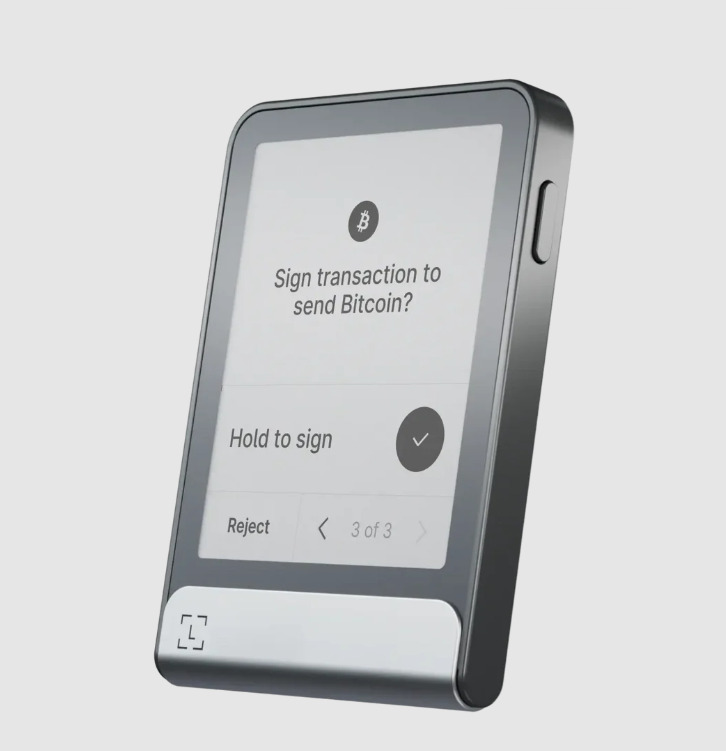
Ledger Flex remains one of the strongest choices for users who want hardware security without giving up a modern interface.
It combines a Secure Element with a 2.84-inch E Ink touchscreen and supports Bluetooth, NFC, and USB-C connectivity. Ledger currently lists the Flex at $249.
Why it stands out
- CC EAL6+ Secure Element
- Secure touchscreen for transaction verification
- Bluetooth, NFC and USB-C
- Broad multi-chain support
- Works with Ledger’s software ecosystem
- Compatible with third-party wallet applications
- Suitable for staking, NFTs and DeFi
- Strong choice for multi-chain portfolios
Best for
Users who hold several major cryptocurrencies and want a combination of hardware security, usability and broad Web3 compatibility.
Watch out for
The Flex is considerably more expensive than entry-level hardware wallets. Users who hold only a small amount of crypto may not need to spend $249.
Our verdict: One of the best all-around hardware options for users who want a balance between security and convenience.
2. Trezor Safe 7 — Best for Open-Source Security
Trezor Safe 7 is one of the most interesting hardware wallets of 2026 because of its emphasis on auditable hardware and open-source security.
It uses three hardware layers, including TROPIC01, an independently auditable Secure Element, an EAL6+ Secure Element, and a hardened microcontroller. Trezor also lists encrypted Bluetooth, USB-C, wireless charging, Tor support and multi-share backup among its features.
This is an important correction to older descriptions of Safe 7 that claimed it lacked Bluetooth.
Why it stands out
- Open-source security approach
- Independently auditable TROPIC01 Secure Element
- EAL6+ Secure Element
- Encrypted Bluetooth
- USB-C connectivity
- Wireless charging
- Tor support
- Multi-share backup
- Passphrase and PIN protection
- Compatibility with MetaMask, Rabby and other third-party wallets
An important 2026 security note
Trezor disclosed research into a vulnerability affecting the TROPIC01 chip in June 2026. Trezor stated that the issue did not expose users’ funds, PINs or wallet backups and that Safe 7 had not been compromised through the disclosed issue.
This is actually a useful lesson for wallet buyers: open-source and auditable security does not mean a product can never have vulnerabilities. The advantage is that vulnerabilities can be investigated and disclosed rather than hidden behind proprietary architecture.
Best for
Technically minded users who place a high value on transparency, open-source development and advanced backup options.
Our verdict: A compelling choice for security-conscious users who prefer verifiability over simply trusting a manufacturer.
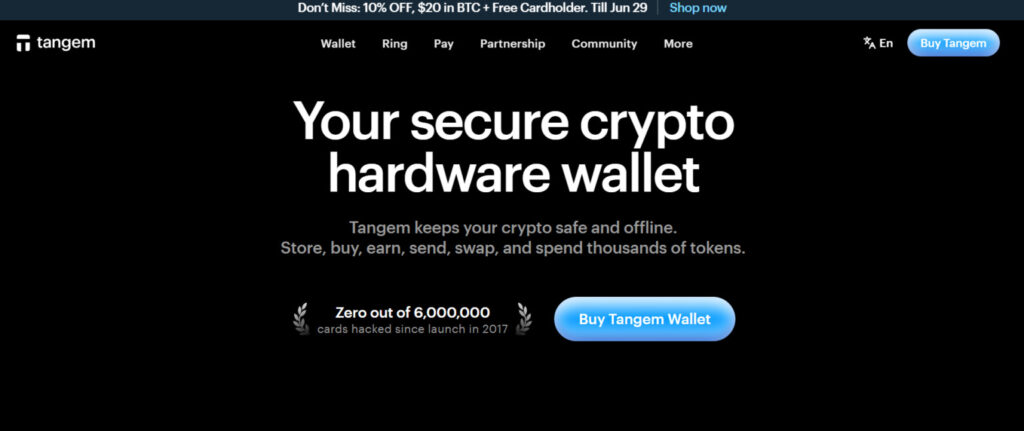
3. Tangem — Best Portable Cold Wallet
Tangem takes a very different approach to hardware wallets.
Instead of a traditional USB-style device with a screen, Tangem uses physical cards that communicate with a smartphone through NFC.
Why it stands out
- Extremely compact
- NFC-based operation
- No cable required
- Multi-card backup approach
- Easy to carry
- Simple physical design
Best for
Users who want hardware-style self-custody without carrying a conventional hardware wallet.
Watch out for
Its design depends heavily on smartphone/NFC interaction, so it appeals more to mobile-first users than people who prefer a traditional screen-based hardware device.
Our verdict: One of the most convenient cold-storage designs, particularly for people who dislike traditional hardware wallets.
4. NGRAVE ZERO — Best for Air-Gapped Security
NGRAVE ZERO is designed for users who want to keep transaction signing physically isolated from network-connected devices.
Its air-gapped approach makes it particularly interesting for high-value long-term storage.
Best for
Users holding significant assets who are prepared to accept additional complexity in exchange for a security-focused setup.
Watch out for
This type of setup is not necessarily the best choice for someone who trades frequently. Greater security can also mean more operational friction.
Our verdict: A specialist option for high-value self-custody rather than a beginner’s everyday wallet.
5. SafePal — Best Budget Hardware Option
SafePal deserves consideration because it offers hardware security at a lower price point than premium touchscreen devices.
SafePal’s current product range includes the S1, S1 Pro and X1, with the S1/S1 Pro supporting QR-based workflows. Its official download center shows active 2026 firmware updates, including an August 2026 update.
Best for
Budget-conscious users who want dedicated hardware rather than keeping larger balances on a software wallet.
Watch out for
The experience is less premium than more expensive touchscreen devices.
Our verdict: A practical entry point for users who want hardware security without paying flagship prices.
6. MetaMask — Best for Ethereum and DeFi
MetaMask remains one of the most important software wallets for Web3.
Its major advantage is ecosystem compatibility.
MetaMask has also expanded beyond its historical EVM focus. Native Solana support launched in 2025, while Bitcoin support was added later, allowing BTC to be managed alongside Ethereum, Solana and other assets.
Why it stands out
- Extensive dApp compatibility
- Strong Ethereum ecosystem support
- Browser extension and mobile apps
- Hardware-wallet integration
- Built-in swapping and bridging
- Native Solana support
- Native Bitcoin support
Best for
DeFi users, Ethereum users, developers and anyone who regularly interacts with Web3 applications.
Watch out for
A software wallet is exposed to the security of the device it runs on.
For meaningful amounts, consider pairing MetaMask with a hardware signer.
Our verdict: One of the strongest choices for active Web3 users, particularly when combined with hardware-backed signing.

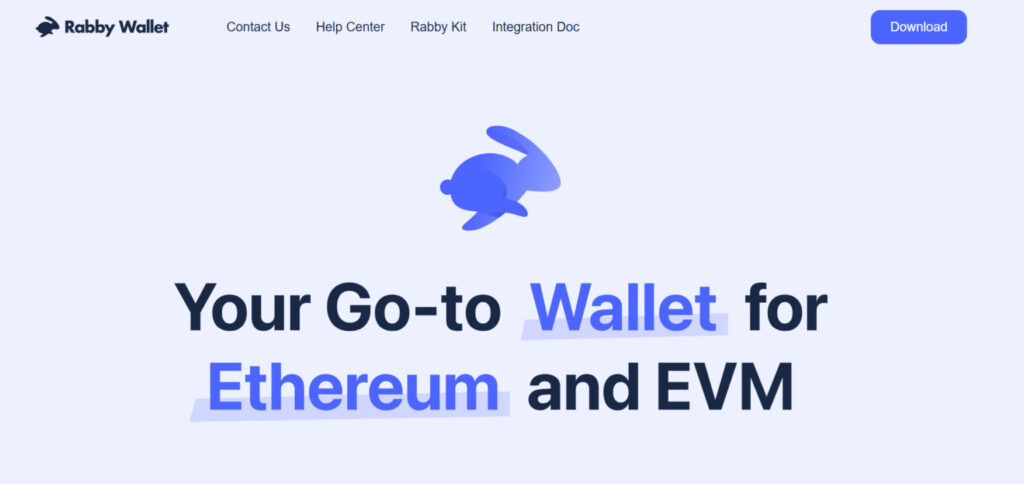
7. Rabby Wallet — Best for Advanced DeFi Users
Rabby is designed around a more detailed transaction experience for users who regularly interact with DeFi protocols.
Its appeal is less about being a beginner wallet and more about giving experienced users greater visibility into what they are about to sign.
Best for
Experienced DeFi traders who want more transaction context before approving operations.
Why use it with hardware?
A useful setup is:
Rabby = interface
Hardware wallet = signing authority
That separation lets you use the convenience of a Web3 interface while keeping the private keys on dedicated hardware.
Our verdict: Particularly attractive for experienced DeFi users who find simpler wallets too limited.
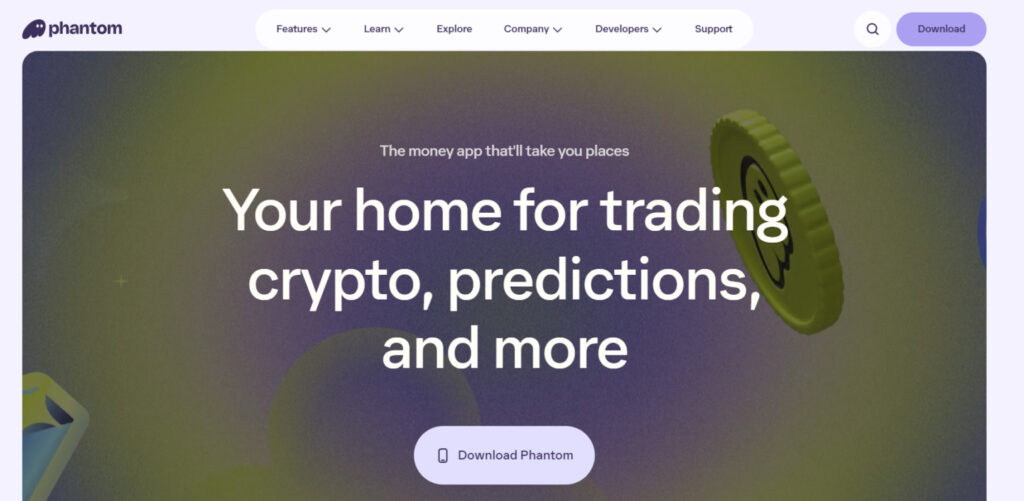
8. Phantom — Best for Solana Users
Phantom became closely associated with Solana and has expanded into a broader multi-chain wallet.
It is particularly attractive for users who care about speed, NFTs, staking and a polished interface. Current industry comparisons also continue to highlight Phantom as a strong Solana-focused wallet.
Best for
- Solana users
- NFT collectors
- Active onchain users
- Users who prioritize mobile usability
Watch out for
Do not assume that a multi-chain wallet supports every major network.
Always check the wallet’s current supported-chain list before transferring assets.
Our verdict: A strong choice for Solana-heavy portfolios and users who want a clean Web3 experience.
9. Trust Wallet — Best Mobile Multi-Chain Wallet
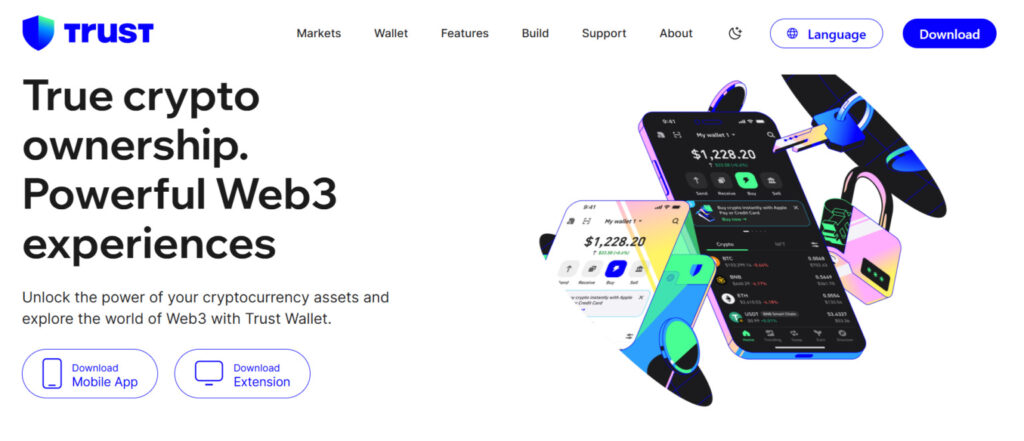
Trust Wallet remains one of the broadest mobile-oriented choices for users managing assets across many networks.
Its current platform supports more than 100 blockchains and millions of assets, making it particularly useful for users with diverse portfolios.
Best for
Users who want one mobile wallet for a large number of networks and tokens.
Strengths
- Broad network coverage
- Mobile-first interface
- Staking
- Swaps
- dApp functionality
- WalletConnect support
- Large asset selection
Watch out for
Broad asset support should not be confused with identical functionality across every network.
Always verify whether the specific asset you own is supported for the exact action you want to perform.
Our verdict: One of the better choices for mobile users managing a diverse multi-chain portfolio.
10. Base App — Best for Beginners Entering the Onchain Economy
One major change from the original version of this article is the terminology around Coinbase Wallet.
Coinbase Wallet has evolved into the Base App.
Base describes the Base App as the next evolution of Coinbase Wallet, combining wallet functionality with trading, payments, apps, social features and other onchain services.
Best for
Beginners and existing Coinbase/Base users who want a relatively simple way to enter the onchain ecosystem.
Strengths
- Beginner-oriented experience
- Base ecosystem integration
- Onchain applications
- Trading and payments
- Broader smart-account direction
Watch out for
The Base App is more than a traditional standalone wallet, so users looking primarily for maximum hardware isolation may prefer a dedicated hardware wallet.
Our verdict: An interesting choice for users who want a simple gateway into onchain applications rather than a traditional hardware-first setup.
11. Exodus — Best Desktop Crypto Wallet
Exodus is one of the strongest choices for users who prefer managing crypto from a desktop application.
It supports Windows, macOS and Linux alongside mobile applications and a browser extension. Exodus describes its platform as self-custodial and supports assets across more than 50 networks.
Best for
Users who want a visually polished desktop wallet with mobile synchronization and broad asset management.
Strengths
- Windows, macOS and Linux
- Mobile applications
- Browser extension
- Multi-chain portfolio management
- Built-in swaps
- Trezor hardware-wallet support
- Simple interface
Watch out for
Exodus is still a software wallet for everyday use. A software wallet should not automatically be treated as equivalent to dedicated cold storage.
Also, Web3 connectivity can vary by wallet version and creation date; for example, Exodus states that WalletConnect is unavailable for newly created mobile wallets after April 22, 2026.
Our verdict: A strong desktop-first choice for users who prioritize usability and portfolio management.
12. Zengo — Best Seedless Wallet Model
Zengo represents a different approach to wallet recovery by using MPC-style technology rather than relying solely on a conventional recovery seed.
This makes it worth considering for users who are uncomfortable with the idea of protecting a single written seed phrase.
Best for
Beginners and users who want an alternative to traditional seed-phrase-based self-custody.
Watch out for
Different recovery architectures create different trust and failure assumptions.
Do not choose a seedless wallet simply because it sounds easier. Understand exactly how account recovery works before storing significant funds.
Our verdict: A valuable alternative for users who prefer modern recovery models over traditional seed phrases.
Bitcoin-Focused Alternative: Coldcard + Sparrow
If you hold Bitcoin only and prioritize self-sovereignty and privacy, a Bitcoin-specific setup can make more sense than a multi-chain wallet.
Coldcard can be paired with Sparrow Wallet for Bitcoin-focused workflows, including PSBT-based signing and air-gapped operation.
Best for
Bitcoin holders who want maximum control and don’t need support for Ethereum, Solana or other ecosystems.
Watch out for
This setup is intentionally specialized. It is not designed for someone who wants to manage hundreds of tokens or interact with every DeFi ecosystem.
Crypto Wallet Comparison: What Actually Matters?
Instead of comparing wallets only by price and the number of supported coins, consider these factors:
| Factor | Why It Matters |
|---|---|
| Security architecture | Determines how signing credentials are protected |
| Custody | Determines who controls transaction authorization |
| Recovery | Determines what happens if your device is lost |
| Supported networks | Prevents sending assets to unsupported environments |
| Transaction verification | Helps identify malicious transactions |
| Privacy | Determines how much activity and identity information may be exposed |
| DeFi compatibility | Important for active Web3 users |
| Hardware integration | Allows software interfaces to use offline signing |
| Fees | Swaps, bridges and network costs can vary |
| Usability | Complex security can lead to user mistakes |
The Safest Wallet Setup Is Usually Not One Wallet
One of the biggest mistakes beginners make is putting everything into one wallet.
A better approach is to separate your funds according to how you use them.
1. Vault Wallet
Use a hardware wallet for long-term holdings.
This wallet should rarely connect to unknown dApps.
2. DeFi Wallet
Use a separate wallet for regular DeFi activity.
Keep only the amount you actually need for active transactions.
3. Experimental Wallet
Use another wallet for:
- New protocols
- NFTs
- Airdrops
- Memecoins
- Experimental dApps
Assume that anything connected to unfamiliar applications carries additional risk.
Example
Suppose you own $50,000 in cryptocurrency.
Instead of placing everything in one hot wallet, you might use:
$40,000–$45,000: hardware-based long-term storage
$4,000–$8,000: DeFi/trading wallet
Small amount: experimental wallet
These percentages are only an example—not a universal rule.
The correct allocation depends on how much you hold, how frequently you transact, and how much risk you are willing to accept.
Hardware Wallets Don’t Protect You From Every Scam
A hardware wallet protects the signing credentials much better than an ordinary hot wallet, but it cannot make a malicious transaction safe.
You can still lose funds by:
- Approving a malicious smart contract
- Sending crypto to the wrong address
- Falling for a phishing website
- Installing a fake wallet
- Revealing your recovery phrase
- Trusting fake customer support
- Signing a transaction you don’t understand
- Connecting to malicious dApps
This is why transaction verification matters.
The hardware device should be treated as the final checkpoint—not as a magic shield against every crypto scam.
How to Protect Your Recovery Phrase
Your recovery phrase is usually more important than the physical wallet.
Follow these rules:
- Never photograph your recovery phrase.
- Never store it in cloud storage.
- Never send it through email or messaging apps.
- Never enter it into a website unless you are deliberately performing a legitimate wallet recovery.
- Never give it to customer support.
- Keep offline backups in secure locations.
- Consider durable metal backup for substantial holdings.
- If using a passphrase, understand that losing the passphrase can make the associated funds inaccessible.
- Consider geographic separation for significant holdings.
- Test your recovery process before storing substantial funds.
The same principle applies to alternative recovery systems: understand what must be protected and what happens if one part of the recovery process is lost.
What Happens If You Lose Your Hardware Wallet?
Losing the physical device does not automatically mean losing the cryptocurrency.
The assets remain recorded on the blockchain.
The critical question is whether you still control the credentials needed to authorize transactions.
If your recovery backup is secure, you can generally restore access using a compatible wallet or replacement device.
But there is an important distinction:
Device loss is usually recoverable.
Recovery-credential loss can be permanent.
That is why your backup strategy deserves as much attention as the hardware wallet itself.
Crypto Wallet Fees Explained
Free wallet does not necessarily mean free crypto transactions.
Depending on the wallet and transaction, you may encounter:
- Blockchain network fees
- Swap fees
- Provider spreads
- Bridge fees
- Fiat on-ramp fees
- Staking commissions
- Exchange withdrawal fees
Always distinguish between the wallet’s own fee and the network fee required by the blockchain.
A wallet can be free to download while a swap or transaction still costs money.
How to Buy a Hardware Wallet Safely
Hardware-wallet security starts before you even initialize the device.
Follow these steps:
1. Buy from the manufacturer or an authorized seller.
Avoid unknown marketplace sellers.
2. Inspect the packaging and device.
Look for signs of tampering.
3. Initialize the wallet yourself.
Never use a recovery phrase supplied by another person.
4. Generate the recovery backup on the device.
Never accept a pre-written seed phrase.
5. Verify transaction addresses on the hardware screen.
Don’t rely exclusively on the computer or phone display.
6. Make a small test transaction.
Confirm that receiving and sending work before moving substantial funds.
7. Secure the recovery backup separately.
Your backup should not sit beside the device.
Trezor itself advises customers to avoid unauthorized third-party devices because you cannot know who previously had access to them.
Wallets We Considered but Didn’t Make the Main List
A good comparison should also explain what it did not choose.
Other notable wallets worth researching include:
BitBox02
A strong hardware option for users focused on Bitcoin and Ethereum who want a simpler, security-focused device.
Bitget Wallet
Worth considering for active multi-chain and trading-oriented users.
BlueWallet
An established Bitcoin-focused software option, particularly relevant for users interested in Bitcoin-specific workflows.
Sparrow Wallet
An excellent Bitcoin desktop wallet for advanced users, especially when paired with hardware devices.
Leather
Worth considering for users working with Bitcoin assets and the Stacks ecosystem.
The fact that a wallet does not appear in the main list does not mean it is unsafe or unusable. It means another option may offer a better fit for the specific use case being evaluated.
Which Crypto Wallet Is Right for You?
If you’re a beginner
Start with a wallet that makes recovery and transaction management easy to understand.
Consider: Base App, Trust Wallet or Exodus.
For larger holdings, graduate to hardware-backed self-custody as your experience and portfolio grow.
If you’re a long-term holder
A hardware wallet is generally the better starting point.
Consider: Ledger Flex or Trezor Safe 7.
If you’re an active DeFi user
Use a dedicated software interface and consider hardware-backed signing.
Consider: Rabby or MetaMask + hardware wallet.
If you’re a Solana user
Consider: Phantom.
If you manage many different chains
Consider: Trust Wallet, Ledger’s ecosystem, or another wallet that explicitly supports the networks you use.
If you’re a desktop-first user
Consider: Exodus.
If you’re a Bitcoin maximalist
Consider: Coldcard + Sparrow.
If you dislike traditional seed phrases
Consider: Zengo or another wallet using an alternative recovery architecture—but understand how its recovery system works before committing significant funds.
5 Crypto Wallet Security Rules to Remember
1. Never share your recovery credentials
No legitimate support agent needs your seed phrase or private key.
2. Verify transactions on the trusted device
Don’t blindly approve what appears on your browser.
3. Separate long-term funds from active Web3 funds
Your savings wallet should not behave like your experimental DeFi wallet.
4. Download wallets only from official sources
Fake wallet applications are a major risk. For example, Exodus specifically advises users to download its applications only from its official website or official app stores.
5. Assume every transaction can be irreversible
Blockchain transactions generally cannot simply be reversed because you made a mistake.
Final Verdict: The Best Crypto Wallet Depends on How You Use Crypto
There is no single best crypto wallet for every person in 2026.
For long-term holdings, a hardware wallet such as Ledger Flex or Trezor Safe 7 provides a stronger security foundation than keeping significant funds in an ordinary hot wallet.
For DeFi, MetaMask and Rabby remain strong software choices, especially when connected to a hardware signer.
For Solana users, Phantom is a natural fit.
For mobile multi-chain management, Trust Wallet offers broad coverage.
For desktop users, Exodus is one of the more polished choices.
For users interested in alternative recovery models, Zengo provides a different approach to self-custody.
And for Bitcoin-only users who prioritize sovereignty and privacy, a specialized setup such as Coldcard + Sparrow can make more sense than a general-purpose wallet.
The most important decision, however, is not choosing the wallet with the longest feature list.
It is choosing a security model that matches what you own, how often you transact, which networks you use, and how well you can protect your recovery credentials.
For many serious crypto holders, the strongest approach is not one wallet at all. It is a combination of secure long-term storage, a limited DeFi wallet, and an isolated wallet for higher-risk experimentation.
That approach reduces the amount of money exposed whenever you connect to the wider Web3 ecosystem.
Frequently Asked Questions
What is the safest crypto wallet in 2026?
For significant long-term holdings, hardware wallets generally provide the strongest security model because signing credentials can remain isolated from internet-connected devices. Ledger Flex and Trezor Safe 7 are two prominent examples, but the safest choice depends on the user’s requirements and recovery practices.
Is Ledger Flex better than Trezor Safe 7?
Neither is universally better.
Ledger Flex emphasizes a polished user experience, Secure Element security and broad ecosystem integration. Trezor Safe 7 emphasizes auditable hardware, open-source security, advanced backup options and multiple hardware security layers.
Can I use a hardware wallet with MetaMask?
Yes. Hardware wallets can be connected to software wallets such as MetaMask, allowing the software wallet to provide the Web3 interface while the hardware device handles transaction authorization.
What happens if I lose my hardware wallet?
Your crypto is not automatically lost. If your recovery credentials remain secure and usable, you can generally restore access using a compatible replacement device or wallet.
Should I keep all my crypto in one wallet?
For significant holdings, separating long-term storage from daily DeFi and experimental activity can reduce your exposure to individual dApps, websites and transactions.
Is a free crypto wallet safe?
A free wallet can be secure, but price is not a security rating. Software wallets are generally more exposed to the security of the device they run on than dedicated hardware wallets.
What is the difference between a hot and cold wallet?
A hot wallet runs on an internet-connected device, while a cold wallet keeps the signing credentials isolated in dedicated hardware or another offline environment.
Does a hardware wallet prevent crypto scams?
No. Hardware wallets can protect your keys from many forms of online compromise, but they cannot automatically prevent you from approving a malicious transaction or sending funds to the wrong address.
Should I use a seed phrase or a seedless wallet?
It depends on your priorities.
Traditional seed phrases are widely supported and give you a portable recovery mechanism, but they require careful physical protection. Seedless or MPC-based systems use different recovery assumptions and may be easier for some users. Understand the recovery model before choosing one for substantial funds.
How often should I update my crypto wallet?
Keep wallet software and hardware firmware current, but only install updates through official sources. Current wallet features and security protections can change over time, so periodically review the manufacturer’s official documentation before making significant changes to your setup..
Which wallet supports the most cryptocurrencies?
Trust Wallet supports 100+ blockchains and millions of tokens, making it the broadest in terms of asset coverage. Ledger Live also supports 5,000+ assets with hardware-level security.

Henry Cross is a cryptocurrency writer, blockchain researcher, and market analyst with more than 10 years of experience covering digital assets, Bitcoin, altcoins, DeFi, and the evolving Web3 ecosystem. Throughout his career, he has built a reputation for delivering accurate market analysis, practical investment insights, and well-researched educational content that makes complex crypto topics accessible to a wide audience. Before joining Crypto Alpha Hub, Henry contributed to respected industry publications including Coinpedia and FXStreet, where he covered market trends, price analysis, blockchain developments, and emerging technologies. Today, as a contributor at Crypto Alpha Hub, he continues to provide timely research, in-depth market commentary, and expert crypto insights, helping readers stay informed and make confident decisions in the fast-moving digital asset industry.