
Everything you need to know before you spend money on mining hardware.
A crypto mining machine is a computer built to solve math puzzles that keep a blockchain safe, and it earns coins for every puzzle it helps solve. Even in 2026, these machines are the backbone of proof-of-work networks like Bitcoin, which alone holds a market worth well over a trillion dollars at times. But owning one is not as simple as plugging it in and waiting for money. Profit depends on hardware, power prices, coin prices, and how crowded the network is.
This guide explains how a crypto mining machine works, which types exist, what they cost, and whether they still make money. You will also learn how to set one up, keep it safe, and avoid the mistakes that cost beginners the most. If you are brand new to digital money, start with our cryptocurrency beginner guide and come back here.
What Is a Crypto Mining Machine?
Definition and Purpose
A crypto mining machine is a computer, or a group of computers, made to run the calculations that proof-of-work blockchains need. Some are plain PCs with strong graphics cards. Others are single-purpose boxes called ASIC miners that do one job only. The purpose is simple: process transactions, protect the network, and earn newly created coins as payment.
How Crypto Mining Supports Blockchain Networks
A blockchain has no bank in the middle, so someone has to check that every payment is real. Miners do this work. They collect pending transactions, group them into a block, and compete to add that block to the chain. Because attacking the chain would need huge computing power, mining makes the network very hard to cheat. To understand the chain itself, read our guide on what blockchain is and how it works.
Why Miners Receive Cryptocurrency Rewards
Mining costs real money in hardware and electricity, so the network pays miners for their effort. On Bitcoin, the winner of each block gets the block subsidy plus transaction fees. Since the April 2024 halving, that subsidy is 3.125 BTC per block. The reward gives miners a reason to stay honest, because cheating wastes power and earns nothing.
How Does a Crypto Mining Machine Work?
Verifying and Processing Blockchain Transactions
When someone sends crypto, the transaction goes into a waiting area called the mempool. A crypto mining machine pulls transactions from there, checks that the sender has enough funds, and confirms the signatures are valid. Bad transactions are thrown out. Good ones are packed into a candidate block that the miner then tries to seal.
Solving Cryptographic Hash Functions
Sealing a block means finding a special number, called a nonce, that makes the block hash start with a certain number of zeros. Bitcoin uses the SHA-256 hash function. There is no shortcut, so the machine guesses billions or trillions of times every second. Whoever finds a valid hash first wins the block. It works like a lottery where more tickets mean better odds.
The Role of Hash Rate in Mining
Hash rate is how many guesses a machine makes per second. It is measured in units like TH/s (trillions of hashes per second) for Bitcoin ASICs and MH/s (millions) for GPUs. A higher hash rate gives you a larger share of the network, and a larger share of the rewards. The Bitcoin network itself passed 1,000 EH/s in 2025, and one EH/s equals one million TH/s.
Mining Rewards and Block Validation
Bitcoin adds a block about every 10 minutes. Every 2,016 blocks, roughly two weeks, the network resets its difficulty so the 10-minute pace holds no matter how many machines join. After a miner broadcasts a new block, other nodes check it. If it passes, the block joins the chain and the miner receives the reward, which becomes spendable after 100 more blocks.
Main Types of Crypto Mining Machines
ASIC Miners (Application-Specific Integrated Circuits)
ASIC miners are chips built for one algorithm only. They are the most powerful crypto mining machine type and they run most of today’s Bitcoin mining.
Advantages
They give far higher hash rates per watt than any other hardware. A modern Bitcoin ASIC delivers 200 TH/s or more while a graphics card cannot get anywhere near that on SHA-256. They are also simple to run, since you plug in power and network and set up a pool.
Disadvantages
ASICs are loud, often around 75 to 85 decibels, and they give off heat like a space heater. They can only mine one algorithm, so if that coin drops, the machine has no other use. Resale value also falls fast when a newer model arrives.
Best Coins for ASIC Mining
Bitcoin (SHA-256) is the main one. Litecoin and Dogecoin use Scrypt ASICs, which can mine both together through merged mining. Kaspa, Dash, and Bitcoin Cash also have dedicated ASIC models.
GPU Mining Rigs
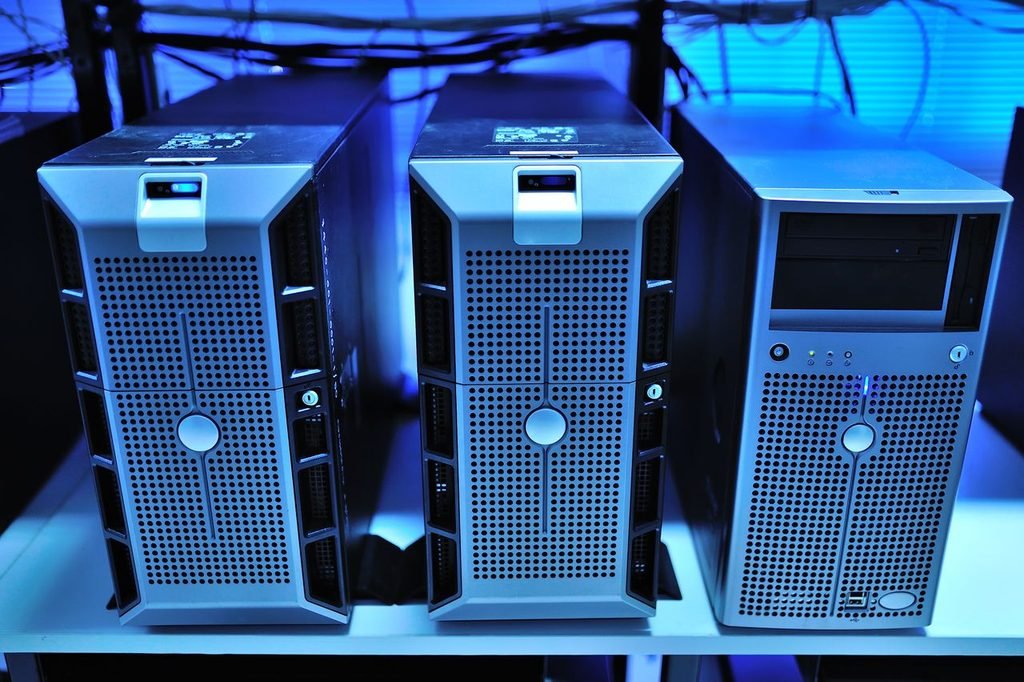
A GPU rig holds several graphics cards on one board, often six to eight, working side by side.
Advantages
GPUs are flexible. You can switch to another coin in minutes, and you can sell the cards to gamers if you stop mining. They also make less noise than ASICs when set up well, and you can start small with one or two cards.
Disadvantages
GPUs use more power for the same output on most algorithms, and the profit per card is usually low. Ethereum mining ended in September 2022 when the network moved to proof of stake, and that removed the biggest GPU coin overnight.
Popular Coins for GPU Mining
Common picks include Ravencoin, Ergo, Flux, and Ethereum Classic. Always check current profit on a calculator, because small coins can change fast.
CPU Mining Machines
CPU mining uses the processor already inside a normal computer or server.
Advantages
There is no extra hardware to buy, which makes it the lowest-risk way to try mining. The noise and heat are also low compared to ASICs and GPU rigs.
Limitations
CPUs are slow at most hash puzzles, so the earnings are small. Many people earn only cents per day, and the electricity can cost more than the coins are worth.
Suitable Cryptocurrencies
Monero is the best known one, because its RandomX algorithm is designed to favor CPUs. Verus Coin is another option that works well on regular processors.
Key Components of a Crypto Mining Machine
Mining Processor (ASIC, GPU, or CPU)
The processor is the engine. It decides your hash rate, power use, and which coins you can mine. ASIC boards hold many hash chips. A GPU rig uses several cards. Pick this part first, because every other choice depends on it.
Motherboard
ASICs have a built-in control board, so you can skip this part. GPU rigs need a motherboard with enough PCIe slots, and many miners use special boards with six to twelve slots. A stable board prevents random crashes that cost you hours of earnings.
Power Supply Unit (PSU)
The PSU feeds everything. A Bitcoin ASIC can pull 3,000 to 3,600 watts, so it needs a high-quality supply and a proper circuit. Look for an 80 Plus Gold rating or better, and leave about 20% extra capacity so the unit does not run at its limit.
Cooling Systems
Heat is the biggest enemy of mining hardware. Air-cooled machines use loud fans, while hydro and immersion machines use liquid and run quieter and often more efficiently. Good airflow in the room matters just as much as the machine’s own fans.
Storage and Memory
ASICs need almost nothing here. GPU and CPU rigs need a small SSD of 120 GB or more for the operating system. RAM needs vary by coin. Some algorithms need cards with 6 GB to 8 GB of video memory, and Monero’s RandomX wants about 2 GB of RAM per thread.
Mining Software
Software connects your hardware to a pool and tracks performance. ASICs come with a web dashboard. GPU miners often use tools like T-Rex, lolMiner, or Gminer, and CPU miners commonly use XMRig. Always download from the official developer page to avoid fake versions that hide malware.
Best Crypto Mining Machines in the Market
Factors Used to Compare Mining Machines
Four numbers matter most: hash rate, power use, price, and efficiency. Efficiency is measured in joules per terahash (J/TH), and lower is better. Also check the warranty, noise level, and the maker’s track record on support.
Top ASIC Mining Machines
Bitmain leads the market. The Antminer S21 gives about 200 TH/s at roughly 17.5 J/TH, and the S21 XP reaches around 270 TH/s at about 13.5 J/TH. MicroBT’s Whatsminer M60 series and Canaan’s Avalon line are strong rivals. For Litecoin and Dogecoin, the Antminer L9 is a popular pick at around 16 GH/s.
Top GPU Mining Setups
GPU mining now works best with efficient cards from the NVIDIA RTX 30 and 40 series or AMD’s RX 6000 series, which give strong hash rates for their power draw. A typical six-card rig costs a few thousand dollars, and profits depend heavily on the coin you choose and your power price.
Entry-Level Mining Machines for Beginners
Beginners can start with a small unit such as a Bitaxe, an open-source mini Bitcoin miner that uses about 15 to 20 watts. Its hash rate is tiny, so it works more like a lottery ticket and a learning tool than an income source. A single GPU or your own CPU is another low-cost start.
Enterprise-Grade Mining Hardware
Large farms use hydro-cooled or immersion-ready ASICs, such as Bitmain’s Antminer S21 XP Hyd, which reaches around 470 TH/s. These machines need industrial power, liquid cooling setups, and a lot of capital. They only make sense at scale with very cheap electricity.
How to Choose the Right Crypto Mining Machine
Budget Considerations
Set a limit that includes the machine, power setup, cooling, and shipping. Do not spend money you cannot afford to lose. Used machines look cheap, but they often come with worn fans and no warranty, so buy only from sellers you trust.
Electricity Costs
Power price decides who wins in mining. At $0.05 per kWh a miner has a real chance. At $0.20 per kWh, most machines lose money. Check your exact rate on your bill, including taxes and fees, before you compare any model.
Mining Difficulty
Higher difficulty means each machine earns less over time. Because difficulty usually climbs, pick a model that stays efficient as the network grows. Newer machines with low J/TH numbers hold up better when competition rises.
Desired Cryptocurrency
Decide the coin first. A SHA-256 ASIC can only mine Bitcoin-type coins, a Scrypt ASIC mines Litecoin and Dogecoin, and a GPU rig can move between many coins. Buying the wrong type is one of the most common beginner errors.
Available Space and Cooling Requirements
One ASIC puts out about 12,000 BTU of heat per hour, close to a large space heater. You need ventilation, a way to push hot air out, and a spot away from anything flammable. A closed small room can overheat within an hour.
Noise Levels and Home Mining Suitability
Air-cooled ASICs sound like a loud vacuum cleaner running all day. They are hard to live with in an apartment. Home miners often choose quieter hydro models, sound-dampened enclosures, or place the machine in a garage or separate building.
How Much Does a Crypto Mining Machine Cost?
Initial Hardware Investment
A modern Bitcoin ASIC usually costs between $2,500 and $5,000, depending on the model and market demand. A six-GPU rig often runs $3,000 to $6,000. A mini miner like the Bitaxe costs under $200. Prices swing with Bitcoin’s price, so check current listings.
Electricity Expenses
A 3,500-watt machine running all day uses 84 kWh. At $0.10 per kWh, that is $8.40 a day, or about $255 a month. At $0.05, it halves to about $128 a month. Power is usually the biggest ongoing cost.
Cooling and Maintenance Costs
Expect to pay for fans, ducting, dust cleaning, and the occasional replacement part. Fans usually fail first. Budget roughly 3% to 5% of the machine price per year for upkeep, and more if you mine in a hot or dusty place.
Internet and Infrastructure Requirements
Mining uses very little data, so a normal broadband line works. What matters is stability, because dropped connections mean lost shares. You may also need a stronger electrical circuit, a power distribution unit, and surge protection.
Hidden Costs New Miners Often Miss
The costs people forget include import duties and shipping on heavy machines, electrician work, pool fees of 1% to 3%, taxes on mining income, and the fast fall in hardware value. A machine bought at $3,500 may sell for far less after a year.
Is a Crypto Mining Machine Profitable?
Factors Affecting Mining Profitability
Five things decide profit: your hash rate, your power cost, the coin price, network difficulty, and pool fees. Change any one and the result changes. That is why two people with the same machine can see very different results.
Hash Rate vs Power Consumption
The ratio between the two is what counts. A machine with 200 TH/s at 3,500 watts is less efficient than one with 270 TH/s at the same power. Always judge by J/TH, not by hash rate alone, since a bigger number can still burn more money.
Impact of Cryptocurrency Prices
Mining income is paid in coins, but your bills are in cash. When the coin price rises, profit rises quickly. When it falls, even efficient machines can go negative. Bitcoin’s halving cuts the reward in half about every four years, so the price must climb to make up for it.
Mining Difficulty and Network Competition
More machines on the network means a smaller slice for each one. Industry data often shows daily income per terahash, called hashprice, near $40 to $60 per petahash per day in recent years. That is only an example, so use a live calculator for today’s number.
Return on Investment (ROI) Considerations
Here is a simple example. Say a machine costs $3,000 and earns $12 a day, with $6 going to power. Your net is $6 a day, so payback takes about 500 days. If difficulty rises or the price drops, that stretches fast. Many miners now treat payback under 18 months as a good deal.
How to Set Up a Crypto Mining Machine
Selecting the Hardware
Use a profit calculator such as WhatToMine or the ones from Hashrate Index, enter your power price, and compare models. Pick the machine that matches your coin, budget, and space. Then buy from the maker or an approved reseller.
Installing Mining Software
For an ASIC, connect it to power and your router, then open its IP address in a browser. For a GPU rig, install the operating system, update the drivers, and download your chosen mining program from the official site.
Joining a Mining Pool
Create an account at a pool, then enter the pool address, your worker name, and password in the miner settings. Well-known Bitcoin pools include Foundry USA, AntPool, ViaBTC, and F2Pool. Compare fees and payout methods before you pick one.
Configuring Wallet Addresses
The pool pays rewards to the wallet address you give it. Use a wallet you control, and double-check every character before you save. Our guide to the best crypto wallets compares hardware and software options, and you may later sell your coins on one of the best cryptocurrency exchanges.
Monitoring Performance and Earnings
Check the pool dashboard daily for the hash rate, rejected shares, and payouts. A sudden drop usually means a heat, power, or network problem. Free apps and pool alerts can message you when a worker goes offline.
Crypto Mining Machine Electricity Consumption Explained
Understanding Power Usage
Power use is shown in watts. A CPU may use 65 to 150 watts, a single GPU 100 to 300 watts, and a Bitcoin ASIC about 3,000 to 3,600 watts. Cambridge researchers estimated Bitcoin’s whole network used around 138 TWh per year in recent studies, which is about 0.5% of world electricity.
Calculating Electricity Costs
Use this formula: watts divided by 1,000, times hours, times your price per kWh. For a 3,250-watt machine running 24 hours at $0.08, that is 3.25 x 24 x 0.08, or $6.24 a day. Multiply by 30 for the monthly bill.
Ways to Improve Energy Efficiency
Choose machines with a lower J/TH. Undervolt GPUs, use low-power modes on ASICs, and keep fans and filters clean. Cooler rooms also help, because hot chips waste more power. Some miners run only during cheap off-peak hours.
Renewable Energy Options for Mining
Solar, wind, and hydro power are becoming common choices for miners. Some farms use extra energy that grid operators would otherwise waste, and others sit near dams or wind farms. If you use rooftop solar, mining can soak up daytime output that you would not use at home.
Solo Mining vs Mining Pools
What Is Solo Mining?
Solo mining means your machine tries to find a block alone and keeps the entire reward when it wins. The reward is large, but luck decides everything, and most small miners never hit it.
What Is a Mining Pool?
A pool joins thousands of miners together. The group finds blocks more often, then splits the reward by each person’s share of the work. Payouts are small but steady, usually daily, with a fee of 1% to 3%.
Pros and Cons of Each Method
Solo mining pays everything but rarely. A 200 TH/s machine on a network near 1,000 EH/s would be expected to find a block about once in 90,000 years. Pools give steady income but take a fee and rely on the pool operator being honest and online.
Which Option Is Better for Beginners?
Pool mining is the better choice for almost everyone starting out. You can see results within a day and learn how your machine performs. Solo mining only suits people who treat it like a lottery ticket with a very small stake.
Common Problems with Crypto Mining Machines
Overheating Issues
Overheating is the top cause of failure. Signs include fan noise at full speed, falling hash rate, and automatic shutdowns. Most ASICs aim for chip temperatures under 80 degrees Celsius, so improve airflow before you blame the hardware.
Hardware Failures
Fans, power supplies, and hash boards are the parts that fail most. A dead board lowers your hash rate without stopping the machine, so watch the numbers. Keep spare fans and check your warranty terms.
Reduced Mining Efficiency
Dust, old firmware, and bad power can quietly cut your output. Clean the machine every one to three months, update firmware from the maker, and use a stable power source to keep hash rate close to its rated number.
Connectivity Problems
Weak Wi-Fi, loose cables, or a pool outage cause rejected shares and offline workers. Use a wired Ethernet connection, set a backup pool in your settings, and restart the router if the miner cannot reach the pool.
Troubleshooting and Maintenance Tips
Start with the simple things: power, cables, temperature, then pool settings. Keep a log of normal hash rate and temperature so you can spot changes early. A short monthly check can add years to a machine’s life.
Crypto Mining Machine Security Best Practices
Protecting Mining Wallets
Never store large balances on the pool account. Send payouts to a hardware wallet or another wallet you control, and keep your recovery phrase offline on paper. Nobody legitimate will ever ask you for that phrase.
Preventing Malware and Hijacking Attacks
Attackers hide malware inside fake mining tools and cracked software, then swap your wallet address with theirs. Download only from official pages, scan files, and check your wallet address in the settings after any update. Hackers also scan the internet for miners with default passwords.
Regular Software Updates
Update the miner’s firmware, your operating system, and your mining program on a regular basis. Updates fix security holes and often improve efficiency too. Read the maker’s notes first and avoid unofficial firmware.
Network Security Measures
Change the default login on every machine on day one. Put miners on a separate network if you can, turn off remote access you do not need, and use two-factor login on your pool and exchange accounts. A firewall adds another layer.
Environmental Impact of Crypto Mining Machines
Energy Consumption Concerns
Proof-of-work needs power by design. Bitcoin mining uses about as much electricity per year as a mid-sized country, which draws criticism. Supporters answer that miners often use stranded or surplus power that would be wasted anyway.
Carbon Footprint Discussion
The carbon impact depends on where the power comes from. Coal-heavy grids create far more emissions than hydro or wind. Cambridge researchers found that around half of Bitcoin mining power in a recent study came from sustainable sources, but estimates differ between studies.
Sustainable Mining Solutions
Miners cut their footprint by choosing efficient machines, using renewable power, and capturing waste gas from oil fields. Others reuse machine heat to warm greenhouses, pools, or buildings, which turns a waste product into a benefit.
Green Energy Mining Trends
More farms now sit next to hydro, wind, and solar sources, and some act as flexible loads that switch off when the grid is strained. This helps balance the grid and lowers costs. Efficiency also keeps improving, with newer chips using less than half the energy per terahash compared to models from five years ago.
Advantages and Disadvantages of Using a Crypto Mining Machine
Benefits
You earn coins directly without buying them on the market. You help secure a network, you learn how blockchains work, and you can profit when power is cheap and prices are strong. Hardware can also be resold, although for less than you paid.
Risks and Challenges
Profit is never guaranteed. Coin prices can fall, difficulty can rise, and machines lose value quickly. You also face noise, heat, power bills, and rules in some countries that limit or ban mining. Do your own research before you buy.
Who Should Consider Crypto Mining?
Mining suits people with low power prices, space for hot and loud equipment, and money they can afford to risk. It is also good for learners who want hands-on experience. If you only want to own crypto, buying it may be simpler. You can explore more topics in our crypto for beginners section.
Conclusion
A crypto mining machine turns electricity into network security and, when conditions are right, into coins. ASICs lead for Bitcoin, GPU rigs give flexibility, and CPUs offer a low-cost way to learn. The core of how it works is simple: hash guesses, a pool, and block rewards.
Costs matter as much as hardware. A machine can cost $2,500 to $5,000, and power can add $130 to $255 a month for a single ASIC. Profit rises or falls with coin price, difficulty, and your electricity rate.
Before you invest, check your power price, run a live profit calculator, plan for heat and noise, and secure your wallet. Beginners should start small and join a pool. Experienced miners should focus on efficiency and cheap power. Mine with money you can afford to lose, and let the numbers guide the decision.
Frequently Asked Questions About Crypto Mining Machines
What is the best crypto mining machine for beginners?
For most beginners, a used or new Bitcoin ASIC like the Antminer S19 or S21 series is the practical choice if power is cheap. If you want a low-risk start, try a Bitaxe or one GPU. Pick based on your power price and the coin you want.
How much can a crypto mining machine earn per day?
A modern Bitcoin ASIC with 200 TH/s often earns roughly $8 to $12 per day before power costs, based on hashprice levels in recent years. After electricity, the net can be a few dollars or even negative. Use a live calculator for current numbers.
Can I mine cryptocurrency at home?
Yes, you can. Check local laws, your electricity rate, and your building’s wiring first. ASICs are noisy and hot, so many people mine in a garage. GPU rigs and CPU mining are easier to run in a normal room.
How much electricity does a mining machine use?
A Bitcoin ASIC uses about 3,000 to 3,600 watts, which is 72 to 86 kWh per day. A GPU rig with six cards uses around 800 to 1,500 watts. A CPU miner uses about 65 to 150 watts.
Are ASIC miners better than GPU mining rigs?
For coins with ASIC support, like Bitcoin and Litecoin, yes, ASICs are far more efficient. GPU rigs are better for flexibility and resale value, since they can switch coins and be sold to gamers. The best choice depends on your goal.
How long does a crypto mining machine last?
With good cooling and cleaning, an ASIC can run for three to five years or longer, though it may become unprofitable sooner as newer models arrive. Fans and power supplies often need replacing before the chips fail.
Is crypto mining still profitable?
It can be, but only under the right conditions. Cheap electricity, efficient machines, and strong coin prices are needed. After the 2024 halving, margins got tighter, so careful math before buying is a must.
What cryptocurrency is easiest to mine?
Monero is the easiest to start with because regular CPUs can mine it. Small GPU coins like Ravencoin are also beginner friendly. Bitcoin is the hardest to mine without ASICs, but it is also the most valuable.

Henry Cross is a cryptocurrency writer, blockchain researcher, and market analyst with more than 10 years of experience covering digital assets, Bitcoin, altcoins, DeFi, and the evolving Web3 ecosystem. Throughout his career, he has built a reputation for delivering accurate market analysis, practical investment insights, and well-researched educational content that makes complex crypto topics accessible to a wide audience. Before joining Crypto Alpha Hub, Henry contributed to respected industry publications including Coinpedia and FXStreet, where he covered market trends, price analysis, blockchain developments, and emerging technologies. Today, as a contributor at Crypto Alpha Hub, he continues to provide timely research, in-depth market commentary, and expert crypto insights, helping readers stay informed and make confident decisions in the fast-moving digital asset industry.